
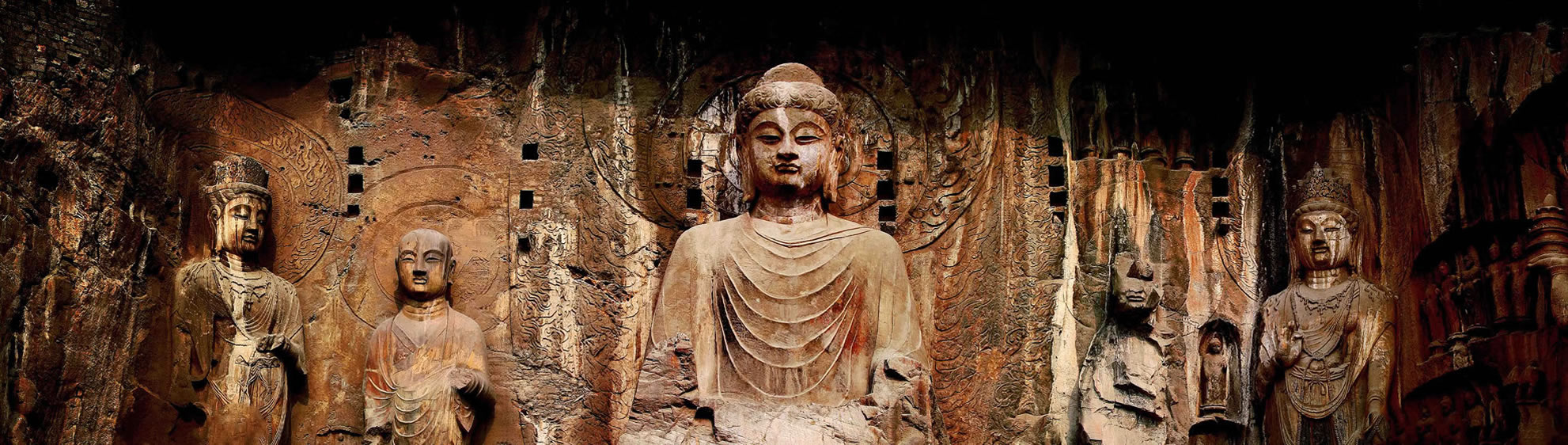
Safeguarding Artistic Treasures, Continuing the Light of Civilization: A Sidebar Report from the 2025 International Forum on Cave Temple Conservation
Cave temples, as significant cultural heritage sites in China, carry cultural memories that transcend time and space, bearing witness to the exchange and mutual learning among different civilizations. Their conservation and utilization represent a massive, systematic project.
To enhance conservation efforts, explore pathways for cultural heritage preservation tailored to national conditions, and ensure the continuous inheritance of cave temple heritage in contemporary society, the "2025 International Forum on Cave Temple Conservation" was held in Luoyang, Henan Province, from August 19 to 21. Jointly organized under the guidance of the National Cultural Heritage Administration, and undertaken by the Henan Provincial Cultural Heritage Administration, the Luoyang Municipal People's Government, the Chinese Academy of Cultural Heritage, and the China Cultural Relics Academy, the forum brought together domestic and international experts and scholars. They focused on the protection, inheritance, and value dissemination of cave temples, sharing cutting-edge practices and theoretical achievements, contributing insights towards the common goal of safeguarding these cultural treasures cherished by all humanity.
Evolving Philosophies, Breakthrough Technologies: Infusing New Vitality into Heritage Conservation
The conceptual framework for conserving China’s cave temples has continuously evolved and matured, progressively establishing holistic and systematic approaches, accompanied by extensive theoretical innovation and practical exploration.
"Conservation philosophies are not static," commented Li Li, Vice President of the Chinese Academy of Cultural Heritage. "We must fully consider the cultural value, current preservation status, and protection needs of heritage sites, continuously refine conservation approaches, strengthen preliminary investigation and research, and appropriately manage the level of intervention."
Xiaofowan, an integral part of the Dazu Rock Carvings, features statues constructed during the Southern Song Dynasty. "We implemented the conservation and restoration project for Xiaofowan. After thorough investigations into the site's authenticity, historical evolution characteristics, microenvironmental monitoring, and spatiotemporal analysis, we proceeded with the restoration of the painted decorations," Li Li explained. She emphasized adherence to principles of interdisciplinary collaboration, science-led conservation, minimal intervention, and preserving the artifacts' current state.
To effectively address deterioration, conservation efforts at the Longmen Grottoes have gradually transitioned from emergency interventions to an integrated approach equally emphasizing remedial and preventive preservation.
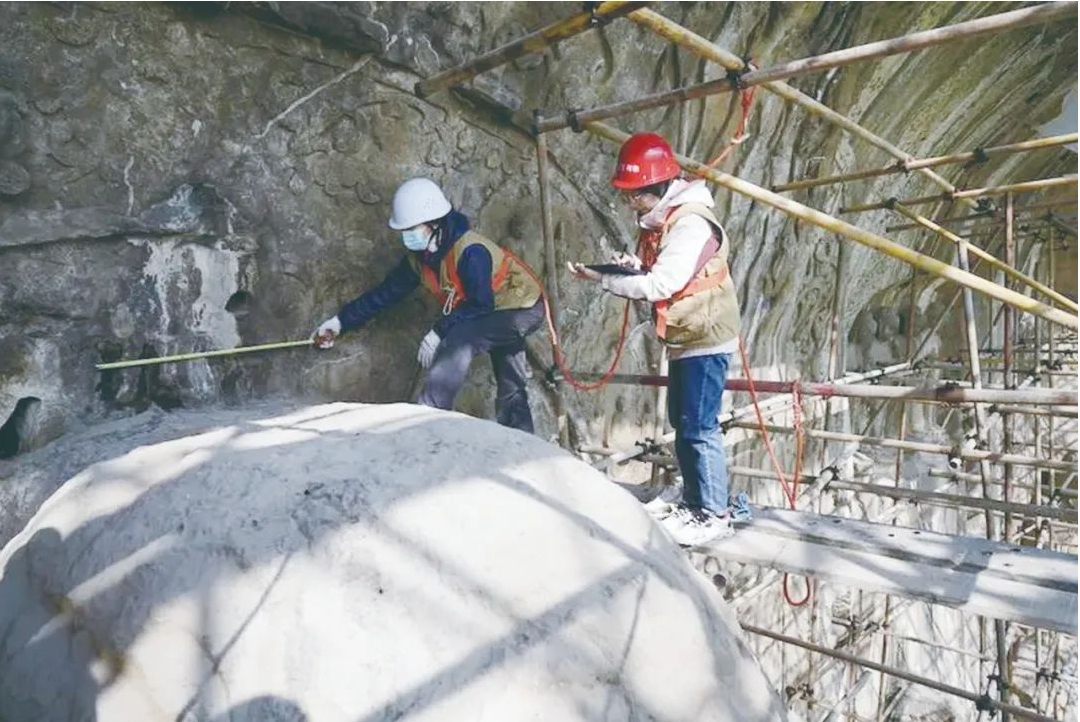
At the Longmen Grottoes in Luoyang, Henan Province, conservation staff are conducting a detailed disease investigation of the Vairocana Buddha statue
"We formulated planning documents, relocated polluting enterprises, remediated spring clusters, improved the preservation environment, established a multi-phase monitoring and early warning system, and implemented routine maintenance, ultimately building a systematic preventive conservation system," said Ma Chaolong, Deputy Director of the Grottoes Conservation Research and Heritage Monitoring Center at the Longmen Grottoes Research Institute.
The Maijishan Grottoes constitute a composite cultural heritage site, comprising cliff surfaces, temples, stupas, and other architectural structures, along with museum collections and ancient documents. Based on this, Yue Yongqiang, Deputy Director of the Maijishan Grottoes Art Research Institute, introduced the concept of the "complex structural-functional entity" of cave temples. He argued that the site area, cliff mass, caves, statues, murals, and pathways collectively form an integrated system. "Guided by this concept, we have actively conserved the painted sculptures, cliff mass, and pathways in recent years. The ongoing comprehensive conservation project will continuously enhance our capabilities and promote establishing a preventive conservation system," Yue Yongqiang explained.
Grotto sites in China face multiple preservation threats. Breakthroughs in key technologies and multidisciplinary collaboration are providing new solutions. Gansu Province hosts 219 grotto sites. Influenced by its elongated topography, these sites exist in diverse environments facing threats like rain erosion, water seepage, and surface contamination. "By studying water-related damage characteristics and mechanisms in three typical grottoes—Yulin in an arid environment, North Grottoes in a humid one, and Tiantishan in a reservoir bank environment—we developed an integrated technical system for managing water damage," said Guo Qinglin, Deputy Secretary of the Party Committee of the Dunhuang Academy. "This system includes techniques like elevated cover plates with TPO waterproofing, temporary rain shelters, and replacement filling for drainage, achieving positive results and offering a reference for conserving grottoes in other Silk Road countries."
Water seepage is a key threat. The Longmen Grottoes have long been severely affected. Macroscopically, karst development, controlled by stratigraphy, geological structure, and neotectonics, is crucial to understanding the water damage. "A clear geological understanding is vital for diagnosing causes and determining solutions. The grouting material was a critical issue," explained Yan Shaojun, Vice President of the Shaanxi Provincial Academy of Cultural Heritage. "Longmen was the first site to systematically use metakaolin as the primary grouting material, a method now commonly used in water damage control at other Chinese grotto sites."
The Dazu Rock Carvings, a typical example of sandstone grottoes in a humid southern environment, have long suffered from fissure seepage. At Baodingshan's Dafowan section, this is particularly destructive. "We studied the characteristics and mechanisms of fissure water damage and, based on the Dafowan project experience, established a comprehensive management system for sandstone grottoes in humid environments," said Jiang Siwei, Director of the Dazu Rock Carvings Academy. "This system encompasses detailed geological investigation, complex hydrogeological modeling, multi-dimensional anti-seepage measures, and whole-process dynamic monitoring and warning."
Global reservoir construction poses an increasingly severe threat to World Heritage. The distribution and risks to heritage sites affected by reservoirs lacked systematic clarification. A team led by Professor Chen Wenwu from Lanzhou University integrated databases, proposed the concept of "World Heritage sites along reservoir banks," and created the world's first risk database, covering 229 heritage sites, 1,277 reservoirs, and 1,124 disaster events. "Using geospatial analysis, we revealed their spatiotemporal aggregation characteristics. Combining kernel density estimation to quantify disaster spatial patterns, we further developed a risk assessment framework with five indicators," Chen explained. "This provides a scientific basis for understanding heritage risks in global reservoir-affected areas."
Technological innovation and digital empowerment are highlights. New progress continues at the Mogao Grottoes, including a multi-field coupling environmental simulation lab, the Gansu Provincial Grotto Sites Monitoring and Early Warning Platform, and the China-Kyrgyzstan Joint Laboratory. "We promoted digitization through mural digitization, image processing, and 3D scanning," said Su Bomin, Director of the Dunhuang Academy. "This experience has been extended to Xinjiang, Inner Mongolia, and the digital preservation of Myanmar's Thatbyinnyu Temple, effectively supporting digital conservation along the Silk Road."
Conserving earthen architectural heritage faces challenges from natural erosion and human damage, while traditional methods have limitations. Technology brings new opportunities. "We are building a full-chain innovation system for new earthen heritage restoration technologies, from basic research and development to standard setting and engineering demonstration," said Liu Hanlong, Academician of the Chinese Academy of Engineering and Director of the Academic Committee of Chongqing University. "This includes microbial mineralization bonding for movable artifacts and restoration reinforcement technologies for earthen structures."
Professor Li Peixun from the UK's National Rosalind Franklin Laboratory noted neutron technology's power for non-destructive heritage study, providing unique insights into composition, structure, and conservation. Complementing X-rays, neutrons penetrate materials deeply and are sensitive to different elements, revealing hidden layers, restoration traces, and internal structures. Neutron imaging and tomography provide 2D/3D internal views, while prompt gamma activation analysis identifies elemental composition, helping trace sources and assess degradation, informing scientific conservation strategies.
Artificial intelligence shows great potential, particularly for stone conservation. "In disease identification, deep learning models can automatically identify deterioration features—like weathering and cracks—from multi-source image data, enabling timely diagnosis and warning," said Huang Jizhong, Dean of the School of Cultural Heritage and Information Management at Shanghai University. "In monitoring, machine learning algorithms can analyze preservation state from environmental parameters and non-destructive data, enabling preventive conservation."
The ongoing Fourth National Census of Cultural Relics has discovered new grotto sites, refining the national resource inventory and preservation status, providing a basis for scientific conservation and management. As a grotto-rich region, Chongqing discovered 108 new sites during the census. "We must leverage the census to enhance conservation standards, promote the official designation of new sites, and advance the comprehensive protection of both grotto structures and their surroundings," said Niu Yingbin, Deputy Director of the Archaeology Institute at the Chongqing Cultural Relics and Archaeology Research Institute.
Systematic Archaeology Presents the Compelling Narrative of Cave Temples
Archaeological work lays the foundation for conservation and utilization. Conducting regional surveys, excavating key sites, and constructing a cultural sequence are primary goals. The Xiangtangshan Grottoes in Hebei, an important Northern and Southern Dynasties royal complex, are a focus. "Guided by regional archaeology, we used total stations and RTK 3D digital technology to survey and document the entire site, promoting an integrated multidisciplinary research model," said He Liqun, Deputy Director of the Cave Temple Archaeology Office at the Institute of Archaeology, Chinese Academy of Social Sciences.
The Buddhist cave remains in Kucha are vast, rich, and unique. As part of a national special investigation, the Xinjiang Kizil Grottoes Research Institute has surveyed 27 cave temple sites in Kucha. "With the progress of the 'Archaeology China' project, excavations and report publication on ancient Kucha Buddhist temples have advanced significantly. Sites like Wushituer, Subashi, and Tuokuzisalai have enriched our understanding," said Miao Lihui, Deputy Director of the Kizil Grottoes Research Institute.
Value interpretation has expanded beyond archaeology, entering an interdisciplinary phase aiming for a more comprehensive framework. "It is essential to construct an integrated ‘Grand Fine Arts’ ecosystem encompassing ‘conservation, research, education, and dissemination,’ and promote international cooperation based on ‘comparative study + creative dialogue,’” said Ma Tianyu, Professor of Sculpture at Tsinghua University. He emphasized the role of fine arts in promoting sustainable conservation.
Cave temples bear the imprint of diverse peoples and eras, reflecting ethnic interaction, integration, and civilizational exchanges. "New stylistic elements from Liang Dynasty Buddhism in Sichuan sculptures, and changing Tang Dynasty Chang'an aesthetics, exemplify the innovation of Chinese Buddhist sculpture. They provide tangible evidence of ethnic groups collectively creating splendid culture," said Lei Yuhua, Director of the Ethnic Museum at Southwest Minzu University.
Archaeological reports are crucial for translating findings into theoretical frameworks. The compilation and publication of the Archaeological Report of the Guyang Cave at the Longmen Grottoesprovided reliable first-hand materials. "The compilation and publication of cave temple archaeological reports must adhere to cultural heritage recording standards and conservation principles," stated Li Xiaoxia, Associate Research Fellow at the Archaeological Research Center of the Longmen Grottoes Research Institute. "They should employ modern methodologies, integrating traditional and contemporary technologies for comprehensive, objective surveying, mapping, and recording."
Management, Utilization, and Inheritance: Towards a Sustainable Future
Current management emphasizes balancing preservation with presentation, bridging academia with the public, and integrating tradition with innovation. Yu Jie, Party Committee Secretary of the Longmen Grottoes Research Institute, highlighted leapfrog progress through establishing a "comprehensive conservation" framework, developing conducive management mechanisms, and promoting effective use of cultural relics. Initiatives range from the Fengxian Temple conservation project to the Leigutai Caves exhibition center, strengthening management and enriching cultural offerings.
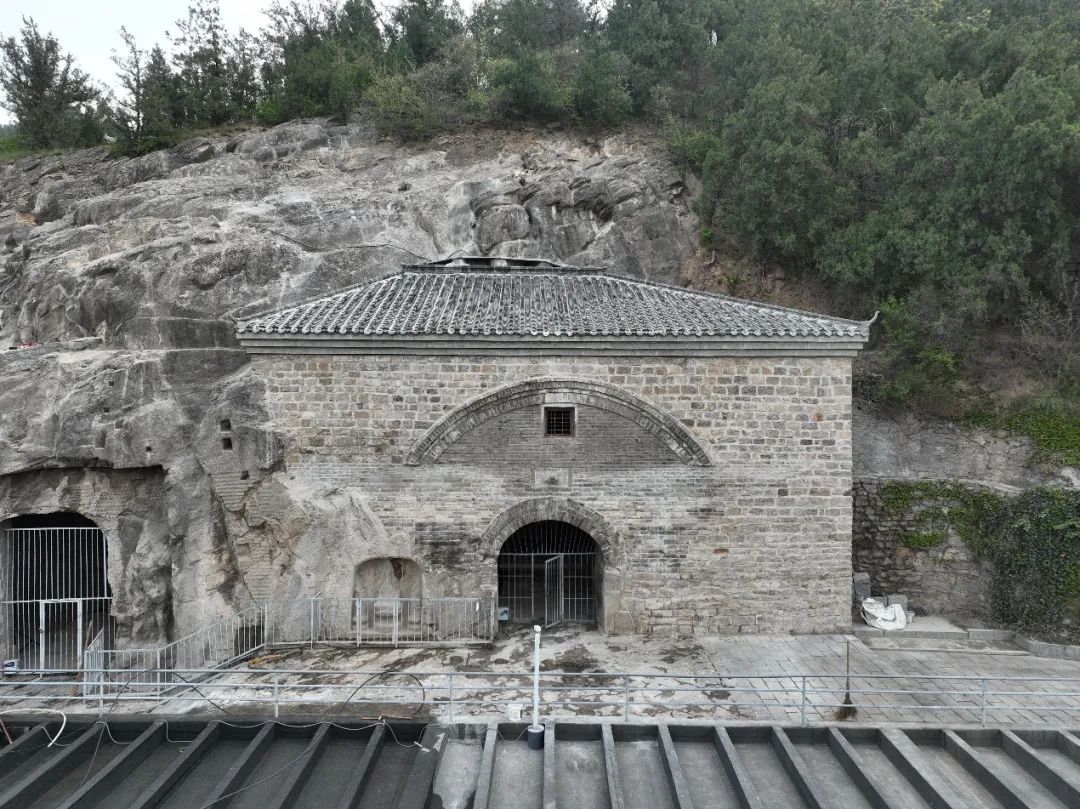
Digital Revival: Making Cultural Heritage Accessible
9,900 scrolls, 60,700 images, over 8.4 million characters—the Digital Sutra Cave Database Platform allows users to "read" and understand the artifacts. "We implemented the 'Digital Reconstruction Project for Dunhuang Cultural Relics Lost Overseas,' establishing an authoritative, accurate, well-documented digital platform for research and public education on the Sutra Cave relics," said Yu Tianxiu, Vice President of the Dunhuang Academy. "This strongly supports Dunhuang studies and cultural dissemination."
Addressing Challenges: Protecting Small and Medium-Sized Grottoes
Chinese cave temple resources are often "widely distributed with localized concentrations." Many small and medium-sized grottoes are remote, less prominent, poorly preserved, and challenging to present. "Sichuan has established a collaborative framework," said Xie Zhenbin, Vice President of the Sichuan Museum. "By integrating their protection and utilization into rural revitalization, public service development, and agri-cultural-tourism integration, we have explored a distinctive approach."
Creating thematic heritage routes has proven effective, leveraging cave temple clusters’ narratives and connections to landscapes and ancient pathways. Du Fanding, Director of the Cultural Heritage Conservation and Inheritance Institute at Beijing Tsinghua Tongheng Urban Planning and Design Institute, cited the Ziyang-Dazu Rock Carvings Thematic Route, connecting 717 sites, consolidating resources, and creating integrated visitor products. It demonstrates a storytelling-driven model where major sites support smaller ones.
Global Vision: International Collaboration and Institutional Support
Achieving sustainable development goals requires leveraging World Heritage potential, particularly cave temples. Long Miao, Research Director of the World Heritage Institute of Training and Research for the Asia and the Pacific (WHITR-AP) Shanghai Centre, emphasized integrating ecological civilization into political, economic, and cultural activities, explicitly incorporating sustainability into management design.
As shared human heritage, protection relies on global dialogue and cooperation. "Adhering to open resource sharing, we provide free digital images online, supporting education, research, publication, and promotion," said Sun Zhixin, Consulting Curator of Chinese Art in the Asian Department of the Metropolitan Museum of Art. The museum has collaborated with the Longmen and Yungang institutes to advance Buddhist art study and conservation.
Improved systems provide solid support. Li Zhirong, Vice President of the Institute of Cultural Heritage at Zhejiang University, advocates for academic organizations to achieve "integrated planning" based on digital foundations, creating permanent, accessible, enrichable digital archives, reflecting a commitment to authenticity, integrity, and professional cultural promotion.